
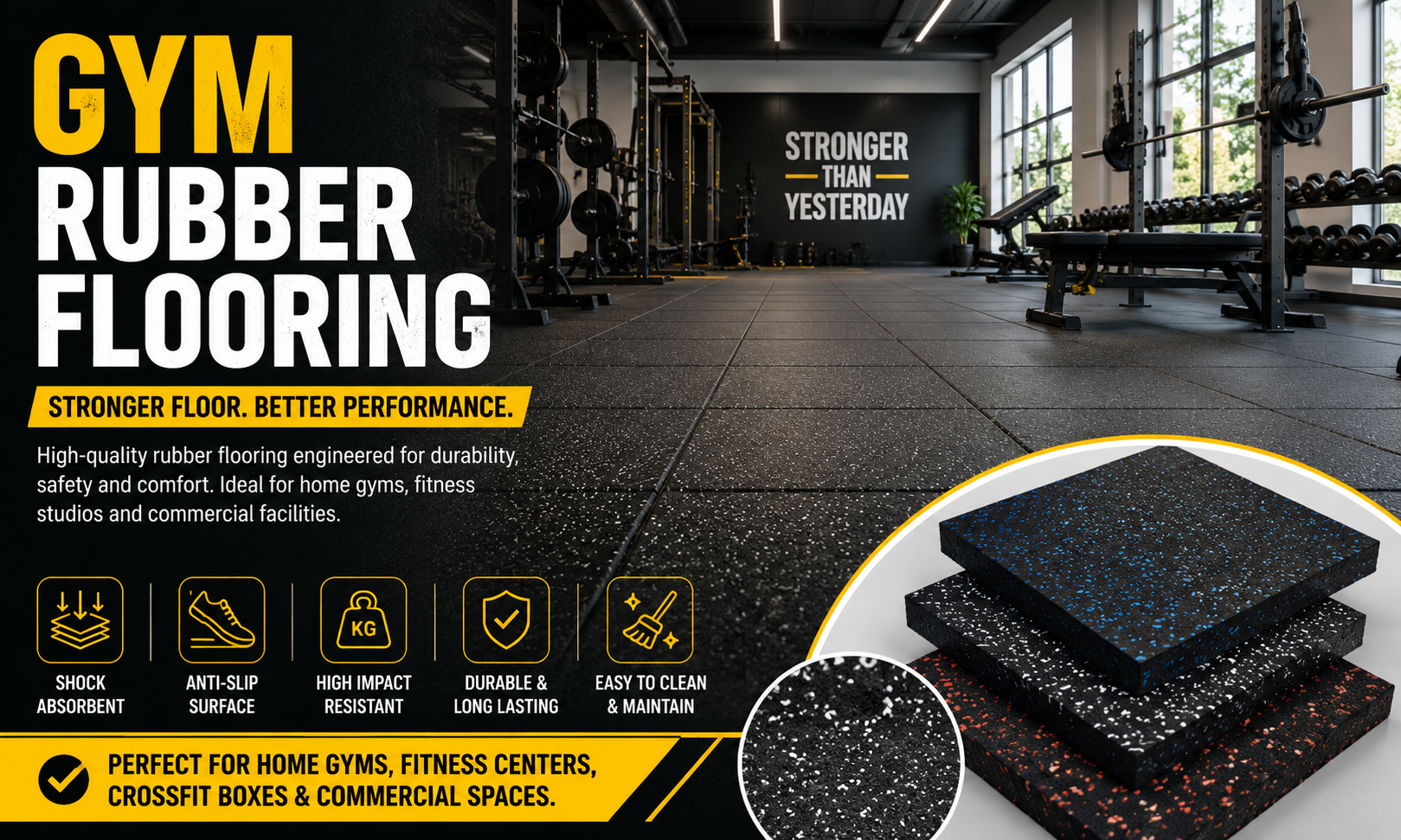
If you’re planning to set up a gym, there’s one decision that most people ignore at the beginning: flooring. At first, it doesn’t feel important. You’re busy selecting machines, planning the layout, thinking about branding, and memberships, so flooring usually comes last on the list. But after a few months, the real problems start showing up. Weights begin to damage the base floor, members start complaining about noise, and the surface feels slippery during workouts. Before you realize it, you’re dealing with repairs, replacements, and unnecessary expenses.
This is exactly where most gym owners go wrong. The truth is, flooring is not just a supporting element. It directly impacts safety, durability, user experience, and even the lifespan of your entire gym setup. Choosing the wrong flooring is not a small mistake; it’s a costly decision that keeps repeating over time. That’s why understanding the right gym rubber flooring options is important before you invest. In this guide, we’ll break down the best options for both home gyms and commercial fitness spaces, so you can choose what actually works, not just what looks good.
Why Gym Rubber Flooring is a Must
Let’s keep it simple.
A gym floor has to handle:
-
Heavy weights dropping
-
Continuous foot traffic
-
Sweat and moisture
-
Equipment movement
Normal flooring fails here.
That’s why gym flooring mats and rubber flooring are widely used. They absorb shock, reduce damage, and improve safety.
For commercial setups, Interlocking Rubber flooring is not optional; it’s a requirement.
For homes, home gym rubber flooring helps reduce noise and protects your base floor.
Types of Gym Rubber Flooring Options
1. Heavy Duty Rubber Gym Flooring
If your gym includes:
-
Deadlifts
-
Squats
-
Free weights
Then you need heavy duty rubber gym flooring.
This type of flooring is thicker and denser. It handles impact without breaking or shifting.
Best for:
-
Commercial gyms
-
Strength zones
-
CrossFit setups
2. Interlocking Rubber Gym Tiles
Interlocking rubber gym tiles are practical and flexible.
You don’t need a complex installation. Just connect and use.
Best for:
-
Home gyms
-
Small studios
-
Temporary setups
Also, if one tile gets damaged, you don’t need to replace the entire floor.
3. Gym Flooring Mats
These are basic and affordable.
Gym flooring mats are usually used under equipment like:
-
Treadmills
-
Benches
But here’s the truth:
They are not ideal for heavy workouts.
4. Non Slip Gym Rubber Flooring
Safety matters more than most people think.
Anti slip gym rubber flooring prevents accidents, especially in:
-
Cardio zones
-
Functional training areas
If your gym has high movement, this becomes essential.
5. Anti Skid Rubber Flooring
Similar to non-slip but with a stronger grip.
Anti skid rubber flooring is useful in high-intensity training zones.
6. Eco Friendly Gym Rubber Flooring
Made from recycled rubber, this option is gaining popularity.
Eco friendly gym rubber flooring gives durability with sustainability.
How to Choose the Right Gym Flooring
This is where most people go wrong.
They choose based on price.
Instead, choose based on usage.
Ask these questions:
-
Will you drop heavy weights?
-
Is your gym commercial or personal?
-
Do you need sound control?
Quick guide:
|
Need |
Best Option |
|
Heavy lifting |
Heavy duty rubber gym flooring |
|
Easy install |
Interlocking rubber gym tiles |
|
Budget setup |
Affordable gym flooring solutions |
|
Noise control |
Noise reduction gym flooring |
Not Sure Which Flooring is Right for Your Gym?
Every gym has different needs: weightlifting, cardio, studio workouts, and the flooring should match that.
Tell us:
-
Your gym type
-
Area size
-
Equipment usage
We’ll suggest the most suitable flooring option for you.
Message us or drop your requirement, we’ll guide you step-by-step.
Common Mistakes to Avoid
Let’s be real.
Most gym owners make these mistakes:
Choosing thin flooring
Ignoring installation quality
Buying based on price only
Not considering long-term use
These mistakes cost more later.
Benefits of Rubber Flooring
-
Absorbs shock
-
Reduces noise
-
Improves safety
-
Protects base floor
-
Long-lasting
One underrated benefit is noise reduction gym flooring, especially for home gyms.
Final Thoughts
Flooring is not just a base it’s the foundation of your entire gym setup. Every workout, every weight drop, and every step your members take is supported by the flooring, and over time, the difference between the right and wrong choice becomes very clear. When you choose the right gym rubber flooring, your space stays safe, professional, and easy to maintain, while your equipment performs better and your members feel more confident during workouts.
On the other hand, compromising on quality or selecting the wrong type of flooring leads to ongoing challenges such as surface damage, noise issues, safety risks, and repeated maintenance costs. That’s why it’s important to look beyond price and focus on actual usage, durability, and long-term performance. Whether you’re setting up a home gym or a commercial fitness space, taking the time to evaluate your needs and choose the right flooring solution can make a significant difference. A smart decision today will save you time, effort, and money in the long run.
FAQs
1. Which gym rubber flooring is best for commercial gyms?
For commercial gyms, heavy duty rubber gym flooring is the best option. It handles high foot traffic, heavy equipment, and weight drops without damage, making it suitable for strength training areas and large fitness centers.
2. What thickness is ideal for gym rubber flooring?
The ideal thickness depends on usage. For light workouts, 10–15mm works well. For heavy-weightlifting zones, thicker flooring (20mm or more) is recommended for better shock absorption and durability.
3. Are interlocking rubber gym tiles a good option?
Yes, interlocking rubber gym tiles are a practical choice for home gyms and small setups. They are easy to install, flexible, and can be replaced individually if needed.
4. How does gym flooring help with noise reduction?
Noise reduction gym flooring absorbs impact from weights and equipment, reducing vibration and sound. This is especially useful in apartments, studios, and indoor gyms.
5. Is rubber flooring better than foam mats for gyms?
Yes, rubber flooring is more durable and suitable for long-term use. Foam mats are lighter and suitable for basic workouts, but they may not handle heavy weights or commercial usage effectively.
6. Can gym rubber flooring be used in home gyms?
Absolutely. Home gym rubber flooring is widely used because it protects the floor, reduces noise, and provides a stable surface for workouts.